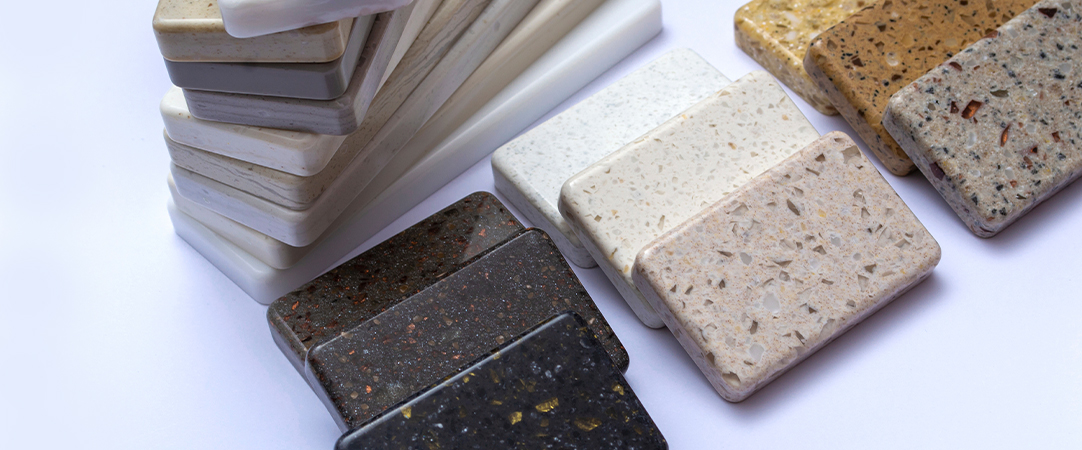
Granite, quartz, and marble can all create a striking countertop, but appearance is only part of the decision. The surface you choose also has to suit the way you cook, clean, entertain, and use the room every day.
For homeowners comparing granite vs quartz or considering marble as another option, it helps to look at each material from several angles. Maintenance, durability, natural variation, design preferences, and the demands of the space can all change which countertop makes the most sense for your project.
Comparing Granite vs Quartz and Marble for Your Countertops
There isn’t one countertop material that suits every household. Understanding how these surfaces differ makes it easier to match the material to your priorities rather than choosing on appearance alone.
Material Composition and Characteristics
Granite and marble are natural stones quarried and cut into slabs. Because they develop naturally, colour, veining, mineral deposits, and pattern can vary from one slab to another.
Quartz countertops are manufactured surfaces. Depending on the product, quartz minerals are combined with resins, pigments, and other materials to create finished slabs. That manufacturing process allows greater control over colour and pattern than you typically see with natural stone.
| Material |
Basic Type |
General Character |
| Granite |
Natural stone |
Noticeable natural variation from slab to slab |
| Quartz |
Engineered surface |
Greater consistency and a broad range of manufactured designs |
| Marble |
Natural stone |
Distinctive veining and natural variation |
The differences become especially important if you want a highly consistent countertop or, alternatively, a surface with characteristics unique to the individual slab.
Appearance and Design Options
Granite offers natural movement, mineral variation, and colours that depend on the particular stone. Marble is often chosen for its distinctive veining and softer natural patterns. Quartz gives manufacturers more control over colour and pattern, so homeowners can find everything from relatively uniform surfaces to designs intended to resemble natural stone.
Rather than deciding from a small online image, look at the material alongside your other finishes. Cabinet colours, flooring, backsplash selections, lighting, and even the size of the countertop area can change how a slab looks once it enters the room.
At First In Counters, our showrooms allow homeowners to compare material characteristics, colours, finishes, and other design details in person before making a final selection.
Durability and Everyday Use
How a countertop will be used matters as much as how it looks. A busy kitchen where meals are prepared every day places different demands on a surface than a bathroom vanity or occasional-use countertop.
Granite is a hard natural stone with strong scratch and heat resistance, although trivets are still recommended rather than placing very hot cookware directly on the surface.
Quartz is also designed for regular countertop use, but its resin content means manufacturers generally recommend protecting it from excessive or sustained heat. Marble requires more consideration in kitchens because its calcium-carbonate composition is sensitive to acids. Citrus and other acidic substances can etch the finish.
Chips, scratches, stains, and other damage are still possible with countertop materials, so household habits should remain part of the decision.
Cleaning and Maintenance Requirements
Daily care is another important difference in the quartz vs granite countertops discussion.
Natural stone care depends partly on the particular stone. The Natural Stone Institute notes that many marble and granite countertops can benefit from sealing, although not every granite necessarily requires it. Sealing improves resistance to moisture and staining rather than making a surface completely stain-proof.
Marble also needs careful product selection because acidic cleaners can etch calcareous stone. Quartz doesn’t require the same natural-stone sealing process, but homeowners should still follow the surface manufacturer’s cleaning instructions and deal with spills promptly.
Think about how much ongoing care you’re comfortable with, not simply whether a countertop can be wiped clean after dinner.
Cost and Long-Term Value Considerations
There isn’t a reliable rule that makes granite, quartz, or marble universally the least or most expensive option. Pricing can change considerably within each category.
Your selected slab or product, countertop dimensions, fabrication requirements, cutouts, edge profile, layout, and installation conditions can all affect the final quote. A particularly distinctive natural stone may be priced very differently from another slab of the same broad material type.
Long-term value is similarly personal. A surface that fits your household habits and maintenance expectations may provide better practical value for you than one chosen primarily because it falls into a particular material category.
Where Each Countertop Material May Work Best
Instead of looking for a universal winner, start with the way you expect to use the room.
Granite may appeal to homeowners who want a natural stone with individual variation and characteristics suited to frequent countertop use. Quartz can be worth considering when design consistency and straightforward routine care rank highly. Marble may suit homeowners who particularly value its natural veining and character and are comfortable with the care its surface can require.
Those aren’t fixed rules. The specific product, location, household habits, and design plan still need to be considered before fabrication.
Quartz vs Granite Countertops: Questions to Ask Before Choosing
Once you’ve narrowed your options, compare quartz vs granite countertops against your actual routine. How heavily will you use the surface? Are you comfortable with periodic natural-stone care? Do you want the variations of a quarried slab or more control over the pattern and colour?
Seeing the options in person can make those answers much clearer. It also gives you an opportunity to look at full-size material characteristics and discuss how edge profiles, seams, cutouts, and fabrication may affect the finished countertop.
Marble can remain part of that conversation if its appearance suits your design direction.
Marble vs Quartz: Which Priorities Matter Most?
A marble vs quartz decision often becomes clearer once appearance is considered alongside daily use.
If marble’s natural veining is the feature drawing you toward it, consider whether you’re comfortable with a material that can etch when exposed to acids. If quartz appeals because of its manufactured colour and pattern options, look at the actual product rather than assuming every quartz surface looks or performs identically.
The better fit is the one whose appearance and care requirements work together with your plans for the room.
Choose Between Granite vs Quartz and Marble With Your Home in Mind
When comparing granite vs quartz and marble, think about how the room will be used, how much maintenance you’re comfortable taking on, and what you want the finished surface to contribute to the design.
First In Counters can help you explore countertop materials in person and compare granite, quartz, marble, and other available options before moving into digital templating and custom fabrication.
Reach out to First In Counters today at 905-899-786 orclick here to get in touch online.
Frequently Asked Questions
How Do I Decide Which Countertop Material Is Right for My Home?
Start with your highest priorities. Consider where the countertop will be installed, how frequently you’ll use it, the appearance you prefer, and how much routine or periodic maintenance you’re comfortable with. Then compare individual materials and products against those needs instead of starting with the assumption that one category is automatically best.
Can I Use Different Countertop Materials in the Same Home?
Yes, different rooms or countertop areas can call for different priorities. A kitchen surface doesn’t necessarily need to match a bathroom vanity or another countertop elsewhere in the home. Look at how the materials coordinate visually, but also consider what each space requires in terms of use and care.
What Should I Look at When Viewing Countertop Materials?
Pay attention to the actual colour, pattern, veining, variation, finish, and how the surface works with the other materials planned for the room. For natural stone especially, viewing the slab can reveal details that are difficult to judge from a small photograph.
Practical considerations belong in that showroom conversation too. Ask how the material suits the intended application, how it should be maintained, and which fabrication or edge options work with your project.
Does Countertop Thickness Affect Which Material I Should Choose?
Thickness can affect the countertop’s appearance and may influence fabrication and design decisions, but available options depend on the material, product, application, and project specifications.
Before settling on a particular thickness, discuss the planned installation and desired look with your countertop fabricator. This allows the choice to be evaluated as part of the whole countertop design rather than in isolation.